Showing posts with label review. Show all posts

Sunday, November 24, 2019

Holy Motors (2012) - Non-linear structure

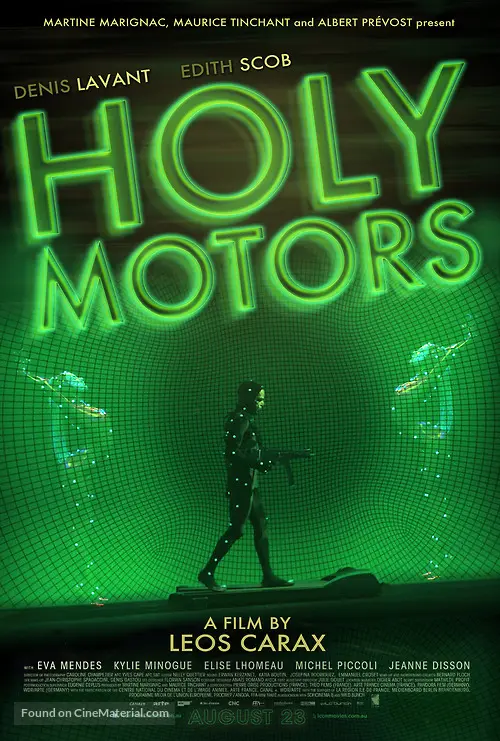
1. Holy Motors poster


Holy Motors (2012) is a fantasy drama film by french director Leos Carax, featuring Denis Lavant in the lead role. This review will analyze the factors that make up this movie to have a non-linear structure.

The film in itself isn’t one that jumps timelines per say. Generally it sticks to a linear time, depicting a day for Monsieur Oscar, appointment by appointment without any jumps back or forward in time, but it does have an underlying message about the sequence and how it is a repetition in Oscars life. Even more so, this linearity in the movie isn’t with a typical structure. It’s almost as if jumping between different lives and identities, taking you out of the story of Oscar, and into someone else’s entirely, making you unsure, what the main protagonists own story even is.

Regardless, the film begins with a different story and character entirely, already signaling how unconventional in narrative the film is. It is a scene of the director himself. A scene of him lonesome, finding his way back into a cinema as if after a long sleep. It’s filled with symbolism and feeling, and is a short sequence that is independent from the rest of the film, as it makes no effort to connect with anything that will follow. The only recurring bits from the beginning are the black and white clips that repeat at the end of the film.
After the sequence with the director we are taken into the story of Monsieur Oscar. The first scene shows him as a well-off businessman, leaving his loving family as he heads to work as he gets into a limousine. After a business call that talks about increasing security, we are taken out of this reality that the film had established by Oscar taking off the businessman costume. This is where we realise, that we’re not experiencing a set up of a normal world, but more transitions from person to person within an individual. The day will have 9 appointments, and soon, after we see Oscar getting into a crotchety old beggar woman’s get-up and he start begging on the street, we can start assuming that this is one of them.
After this he yet again gets back to his limo and takes the costume off. At this point the audience can only expect to see the unexpected. The film clearly actively uses twists, appointment by appointment, and even when we learn of what the appointment is, we never know what to expect within it. After the beggar woman, Oscar dons a mo-cap suit and heads into a film studio. He performs several intensive fight scenes and has an erotic performance with another female actor, by the end revealing that they’ve been acting out weird sci-fi aliens.

2. Model Kay M. (left) and Monsieur Merde (right)


Back in the limo again he dons a new appearance, of an insane looking man called Monsieur Merde. But before leaving he has himself a take-away meal for lunch while he has a short discussion with his trusty driver Céline. The limousine is where we can see Oscar for himself as he is, it’s the one place where he gets to play his own story and identity. After the short limousine interlude, he’s off into the sewers to get to his destination, then shambling through a cemetery we witness a comical insane scene of him kidnapping a model from a photoshoot and have an odd sequence of sharing space and fulfilling almost painting-esque scenes together.
The film keeps presenting only unexpected and surreal scenes. 
After the madman, Oscar becomes a father, picking up his daughter from a party. Then we’re thrown into a musical interlude as Oscar wades through a church playing an accordian as a whole band of men join him. Following that he becomes a killer, who murders a man that Oscar then transforms to look like the killer he is acting out, who then kills Oscar himself, leaving 2 copies of the killer on the floor bleeding out. The lines in these acts are constantly blurring from  how believable they seem, we’re constantly kept in confusion on what we can believe is real. Oscar shambles out towards his limo, as if on the brink of death as Celine helps pull him in. Soon we’re cut to him unscathed, sitting in the limousine on his way to the next appointment, but this time, he is not alone. There is a new figure, seemingly someone with authority over him, sitting in the limousine who addresses Oscar, informing how his performances haven’t been up to par. That he’s been reported to seem tired. This is yet another scene that informs how, Oscar’s own identity only comes out and is addressed only within the limousine which also serves as his closet and storage of other identities. This scene acts as an indirect breaking of the fourth wall, as they discuss how Oscar misses the presence of cameras, how they used to be as heavy as humans, but now not visible at all, making him paranoid. This directly feels like a point at the audience watching the film, how the performance never ends, even when he’s not in make-up.

On the way to the next appointment he spontaneously asks Céline to stop the car, he hurriedly charges out with a mask on and finds a man who appears to look like the businessman he was acting as in the morning, shooting him in the head. The businessman’s bodyguards then shoot Oscar several times, but yet again, reality is questioned as Céline simply rushes through the gathered crowd to usher Oscar on his way not to miss the next appointment and they both get up and leave. The state of the businessman is left in mystery. The next appointment faces the topic of mortality yet again as he acts out an old uncle on his deathbed as he has a meaningful last conversation with a girl by his side. After the act he leaves, excusing himself about having another appointment, the girl nods understanding, and says that so does she, showing that they both in this scene were only actors, playing yet again with that indirect breaking of the 4th wall and the whole concept of what it means being an actor and where the lines blur.

3. Uncle on death bed


On the way to the next appointment, they are spontaneously stopped again, but this time from a traffic misunderstanding with another limousine driver. While waiting for it to be settled, Oscar recognises the person in the other limo, a woman named Eva, who turns out to be someone he hasn’t seen in 20 years. Finally we get to glance a bit more into Oscars own identity now outside of his limousine as they go to a vacant building where Eva has an appointment as an air hostess who spends her last night there. Through song on the way up the building, we’re informed that they used to have a child a long time ago and the deep grief they have about this. Oscar leaves before Eva’s customer arrives, and on his way back to the limousine he finds Eva and the customer dead on the ground, this time brutally showing the reality of this death as Oscar freaks out and runs to Céline’s limo.
The way to the last appointment is a bittersweet experience as Oscar obviously grieves the tragedy, but then also has some nice exchange with Céline. This last appointment is what brings the film to a full circle. Although it’s a totally different circumstance, as shown by the fact that he enters a home with apes living in it, he ends the day with a family by his side, assuming that the next morning he will leave just like he had in the previous.

4. Holy Motors garage


In the end we are shown Céline driving the limousine into a large garage alongside a lot of other limo's. We suddenly get a vague insight in the story of Céline as she parks and waits for everyone to leave, putting on a mask and calling someone about her coming home. As the lights dim and everyone has left, as a twist, the limousines come alive and speak with each other, discussing their own inevitable demise.

In conclusion, although Holy Motors stays in a linear flow in terms of time, it is most definitely a non-linear film, because it deviates from the usual act structures. We don’t get an introduction or plot points, as the film itself is almost like living out several different stories, without getting much closure on any of them.

Illustration list:

1. Holy Motors poster (2012); Available on: https://www.google.com/url?sa=i&url=https%3A%2F%2Fwww.cinematerial.com%2Fmovies%2Fholy-motors-i2076220%2Fp%2Fswc47bvr&psig=AOvVaw0QGwWNfHI-LSgkdQJz7L0Q&ust=1574715528852000&source=images&cd=vfe&ved=0CAIQjRxqFwoTCOiLp9Heg-YCFQAAAAAdAAAAABAD (Accessed at 24 November 2019)
2. Denis Lavant as Monsieur Merde. Holy Motors movie still
3. Denis Lavant as an uncle on his death bed. Holy Motors movie still
4. The Holy Motors garage. Holy Motors movie still

Wednesday, November 6, 2019

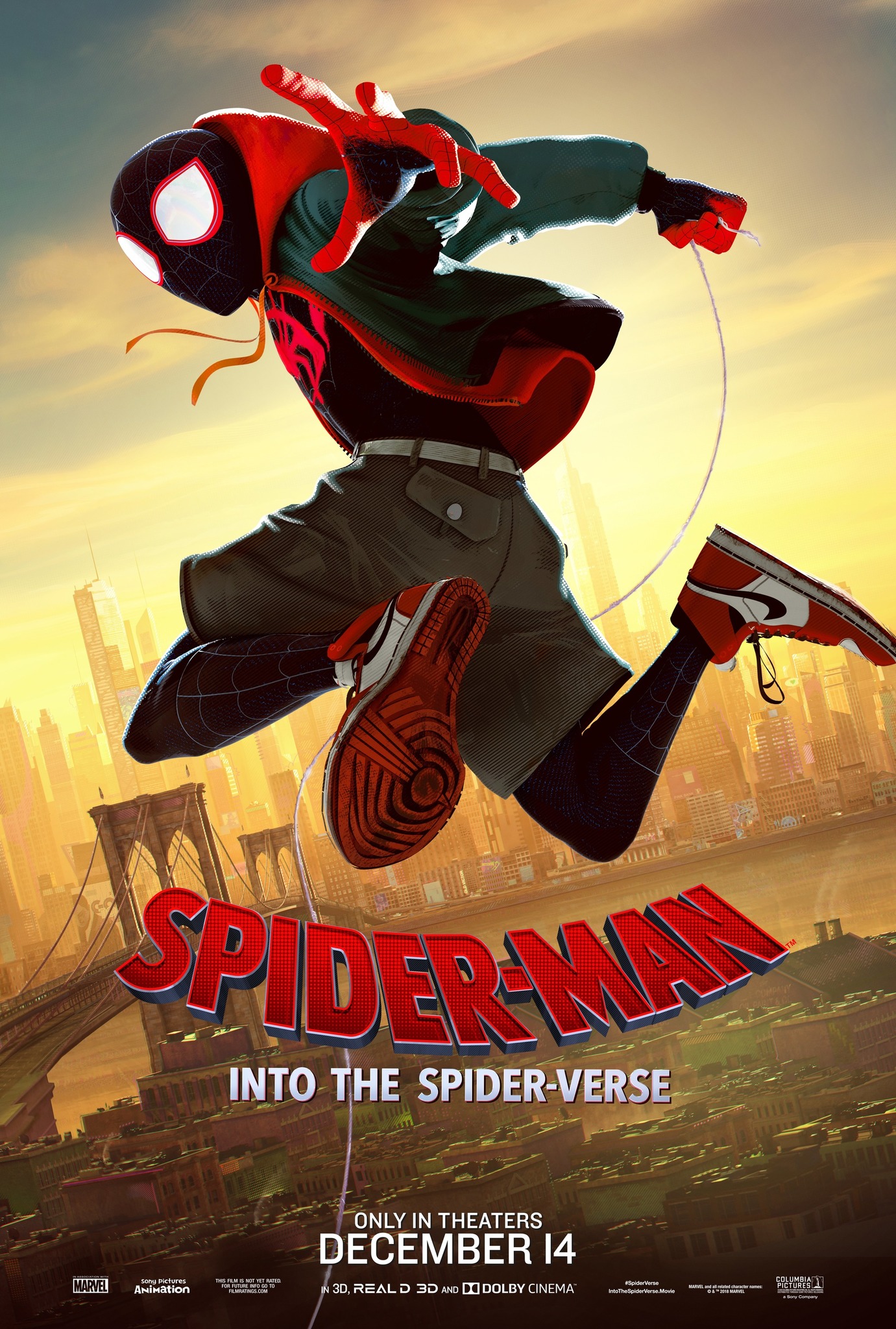
Spider-man: Into the Spider-verse - Linear Structure

Fig. 1

Spider-man: Into the Spider-verse is an animated film, directed by Bob Persichetti, Peter Ramsey and Rodney Rothman. This review will analyze the structure of the film and what makes it a 5 act linear narrative.

The film may give a sense of non-linearity thanks to its whole premise of merging dimensions and timelines, but the story takes place in a single location and time, and specifically follows the journey of Miles, who originally resides in the setting. The only factors breaking linearity are the flashbacks of backstory when the other spider-heroes are introduced, otherwise the sequence of events follows a linear structure.

The first act sets up all the necessary exposition fluidly and consequently. It starts off by setting up who the spider-man of the current universe is, in a sequence that details his life, experiences and views. This is the first introduction to the concept of backstory flashbacks, and sets up what to expect from it. It’s after that sequence when begins the exposition of the film’s protagonist, Miles Morales. In the first shot we already learn a lot about his personality and interests. The scene is set in his bedroom, from which you can tell his interests, creativity, intelligence, but also his chaotic and unorganized lifestyle. We then learn about his family and the dynamic with his parents.
On his way to school, we’re introduced to his relationship with his friends in his old school and learn that this is the first day of him switching schools. On his way he’s seen plastering his custom stickers on public property, signaling his love for graffiti and unruly nature. This segways into him and his father in a police car, where we find out Miles’ disdain for the “elitist school” and a tension in the family with Miles’ uncle.
The school life begins and we learn about its intensity and Miles’ growing contempt towards it, as well as subtle foreshadowing of certain characters. Afterwards we are introduced to his uncle and the trusted relatable relationship with him. We follow them into a prohibited underground area, where his uncle encourages Miles to express his creativity through graffiting a design he had drawn. During this is when the inciting incident happens that leads into Act 2.

During the graffiti scene we are shown the presence of an obviously unnatural spider, creeping around them both, up until the end when it bites Miles who kills it without much thought. This is the point after which everything changes for him and all the complications start to show up.
At first it starts off with small signs, like his body changing, and reacting weirdly. It gets worse when his hands and feet start sticking to everything he touches, causing even more problems in his normal life. After a tantalizing turn of events he desperately searches for someone to reach out to, after hearing no response from his uncle and not trusting his dad enough, he makes his way to where he got bit to see the spider. This is where he is lead into finding out about the villain Kingpin and his plans, and takes upon the responsibility to stop him.
In this act he continues to explore through the hurdles of understanding his powers, meets the Peter B. Parker from another dimension, and hopes to learn from him. After complicating the journey even more by accidentally breaking the key to stopping Kingpin, Miles and Peter go on the first major mission to get the data necessary to make a new one. This is where they meet another one like them, the spider-woman Gwen. The second act ends with the mission being a success and they go to visit Aunt May in hopes of help. Here they are introduced to 3 other inter-dimensional spider-heroes.

Act 3 starts off with a fresh new hardship for Miles, when the other heroes don’t trust in his abilities. Because of this he runs off to his uncle’s place in hope of solace and to leave a sign to someone he can trust but instead he learns that his uncle works with the villain. To complicate things even more, his escape from him ends up in revealing their location at Aunt May’s and a dramatic fight ensues where he reveals himself to his uncle. In result Prowler, Mile’s uncle, is shot down by Kingpin, crushing Mile’s morale even more. The complications keep building up as its revealed that the other heroes really cannot entrust him with their mission and he is left to his own. This is when it starts gradually moving towards the climax. After a meaningful monologue from his father, he faces his fears and takes a leap of faith that was necessary for him to have control over himself. This takes us right into the climax, having mastered himself, he joins the other heroes in stopping Kingpins plan, and successfully manage to send all the other heroes back to their dimensions.

At this point the only stakes are defeating Kingpin, seeing as the climax has been achieved with the foiling of his plan and saving the other heroes. Act 4 is an action packed fight between Miles and Kingpin, as the reversal to all the build up and development Miles had gone through. This is where he puts to use all he’s learned and the story reveals and connects key factors and motivators that had driven the story, like Kingpins drive to bring back his family coming back to haunt him, and Miles’ drive to atone to his father in his own way.

After the fight we reach the denouement as act 5. The villains have been defeated, Miles reconnects with his father, and Brooklyn’s Spider-man has been restored again. Miles proceeds to do well in his real life, keeps up as spider-man and makes new friends, bringing the film to a close with a positive resolution and open doors to possible communication with his spider-friends over dimensions.

In conclusion, the whole structure of Spider-man: Into the Spider-verse comes together in a clear but seamless 5 act structure. Even with the dimension merging and time jumping with backstories, the story keeps a consistent linear structure.

Illustration list:

Figure 1: Spider-man: Into the Spider-verse poster (2018). Available at: https://www.imdb.com/title/tt4633694/mediaviewer/rm173371392 (Accessed on 06 November 2019)

Tuesday, October 22, 2019

The Lion King (1994) - Archetypes


The Lion King (1994) is an animated film about the lion prince Simba, whos father is killed, and Simba is outcast by his traitor uncle, only to return to challenge and overthrow him after he grows up. This review will cover the archetypes of The Lion King’s hero’s journey.

Some of the characters hold several of known archetypes, but the one and only hero, ofcourse, is Simba the young lion prince, having been promised the kingdom, betrayed by his uncle, ran off, and returned to save pride rock from his treacherous uncle Scar. His heroism shines throughout the film. As a cub he was ready to be brave and face dangers like, protecting Nala and, ofcourse, his journey of atonement to his father, family and himself.

The shadow in this film without a doubt is Scar. He is filled with envy, anger and loathing, capable of doing the most despicable actions to have his way and revenge. Being the weaker and younger sibling of king Mufasa, he was, in a way, his brother’s shadow.

The herald, or the one to call to adventure, are both Mufasa and Rafiki. Rafiki begins the call in the opening sequence as he presents Simba to the world. It is his entrance into life and a show of his destiny that awaits him. The spectacular ceremony with all the animals there to witness is a clear sign that Simba is no ordinary lion and that there’s much more in store for him.
Mufasa is the herald when he brings Simba up to the top of pride rock to teach him about the responsibilities of being king. It is when it’s made clear to Simba, that he is destined to be king one day.

When Simba and Nala run off from Zazu they enter the dreadful elephant graveyard, outside of their territory, and there they meet the threshold guardians, the hyenas. They are confronted by Shenzi, Banzai and Ed, who are keen on hunting the intruders down, leading into a suspenseful chase.

The tricksters in The Lion King took away Simbas worries and disconnected him from the troubles he had. Timon and Pumba were introduced as laid back and carefree characters, they distract Simba from his responsibilities, but not necessarily in a bad way. They help with comedic relief in the film and keep it light.

The biggest mentor to Simba was Mufasa. He taught him life lessons throughout the film, starting with the lesson on top of pride rock, to after delving into the elephant graveyard and even after his passing as he appears in the clouds when Simba has grown. Other than Mufasa, Rafiki also takes part as a mentor when Simba feels lost and doesn’t know who he is. He guides him through to reach the ultimate lesson from Mufasa so he can gather the strength to return home.

Simbas allies were any characters that weren’t Scar or the hyenas. Most prominently being Timon, Pumba, Nala, Zazu, his mother Sarabi, and the other lions.

The mother and father in the film are clearly Sarabi and Mufasa, both responsible for raising up Simba.

The child archetype in the film fits Zazu the most. He is Mufasa’s majordomo, with all the information, complaints and advice. He insists against Simba’s mischief, and is always worried.

Nala appears as the maiden in her and Simba’s reunion. Their previous friendship turns to love in the romantic sequence, but ends in them trying to convince each to no compromise. Simba refuses to reveal the secret he holds, and Nala fails to understand him. Reguardless she is the one to reintroduce him to the reality and kickstarts his return back home.

The shapeshifters of the movies are Scar and the three main hyenas. Scar all along the movie plays the ally all while plotting a coup at the same time. He continues his devious plans with convincing the lions of pride rock about Mufasa’s and Simba’s death and takes upon becoming king. But by the end of the movie, the hyenas also have a change of opinions. Starting off as allies with Scar, after him badmouthing them and their motives, they turn on him and end him off.

In conclusion, The Lion King follows all the typical archetypes fairly clearly, with several character's roles overlapping. 


Illustration list:

Figure 1: The Lion King poster (1994). Available at: https://www.google.com/url?sa=i&source=images&cd=&cad=rja&uact=8&ved=2ahUKEwif0KXQ7bDlAhWJkxQKHRF8DlsQjRx6BAgBEAQ&url=https%3A%2F%2Fwww.amazon.com%2FAdvance-Rolled-Movie-Poster-27x40%2Fdp%2FB07SV41XR4&psig=AOvVaw3HFfO5T0qX8zevNsFbtHdy&ust=1571867633010365 (Accessed on 22 October 2019)

Tuesday, October 15, 2019

Puss in Boots - The Heroes Journey

Fig. 1


Puss in Boots (2011), the animated film, directed by Chris Miller, follows the origin story of the fabled Puss in Boots, an outlaw cat looking to redeem himself of his past misunderstanding. This review will look over how the narrative follows The Heroes Journey plot points.

With the rate of how fast the film moves along, a lot of the Heroes Journey points can be found repeating several times, merging, or mixing around. It starts off in the ordinary world, which is the overall world of Puss being an outlaw, looking for yet another heist.
This leads into the first call to adventure, where he is given several heist options, all which he refuses, up until being offered the heist of the magic beans, which could be a supernatural aid in accepting the adventure that would help him redeem himself. Though, there is another moment that effectively portrays the call to adventure,  it is where Humpty Dumpty asks for Puss’ help. The call is quickly refused because of their past, but he gives in and accepts because of the supernatural aid of how the magic beans could help him get the golden goose eggs to redeem himself to his mother and childhood home.

Crossing the first threshold fits to the moment of entering Jack and Jill’s room through the window. This is the first action of the heist and first proper encounter with the antagonists and the magic beans. This leads into the belly of the beast, in a chase that leads throughout the city and into the den of cats, where Puss has a showdown with Kitty, which in itself could be seen as a start to the road of the trials. The road of the trials continue in the heist for the beans.
It was introduced earlier, but at this point made clearer, that Kitty is the woman as tempress, aswell as the meeting with the Goddess. Together, Puss, Kitty and Humpty reach the Apotheosis, where they plant the magic beans that propell them up to the giant’s castle, in which they find their Ultimate boon, the golden goose. This is also where the epitome of the magic flight is emphasised with the wonderous world of clouds and enormous castle.

The atonement with the father, or rather in this case, the mother, is after being left behind from the ambush and finding his way to his hometown. He is betrayed by Humpty who claims this as revenge and Puss is confronted by the guards. His mother intervenes and pleads Puss to stand down, and in atonement he does so, allowing himself to be arrested.
While in prison, Puss learns the consequences that because of acquiring the golden goose, its mother will come after it and destroy the town in the process. This triggers the refusal of the return, where Puss refuses to stand down and is motivated to save the town. He attempts to escape and receives the help of Kitty, the rescue from without.

The crossing of the return threshold is perhaps very literal, with the moment of Kitty cutting the rope of the lift, sending Puss flying into the light of day, into the town.
After successfully saving the town he becomes master of two worlds. He is still a master outlaw, but now having redeemed himself to the people he cares about, he is also seen as a hero. This gives him the freedom to live, with the past no longer haunting him, and still able to live his exciting outlaw life.

In conclusion, the movie Puss in Boots follows The Heroes Journey, although in a very mixed and matched fashion.


Illustrations:

Figure 1: Puss in Boots poster (2011). Available at: https://www.imdb.com/title/tt0448694/mediaviewer/rm407879168 (Accessed on 15 October 2019)

Tuesday, October 8, 2019

Perspectives: Pulp Fiction and Postmodernism


This review will analyze the factors that make the film Pulp Fiction a postmodern film. Directed and written by Quentin Tarantino. The main reference sources will be John McAteer’s
Three Stories about One Story: Postmodernism and the Narrative Structure of Pulp Fiction, Vikram Murthi’s The Eyes Behind the Mask: “Pulp Fiction” and Postmodernity 20 Years Later, and Sabina Easmin’s Film and Postmodern Culture. This will explain, how at any moment of the film there is something that backs up its postmodernity.

Figure 1
Pulp fiction carries a schizophrenic, yet at the same time relatable air, by showing mundane situations or conversation, followed by a clashing of not so mundane scenarios. I.e. the first scene leading from Vincent and Jules talking about Europe and foot massages, leading into a violent confrontation during breakfast. (see Fig.1)

“Postmodern cinema is characterized by disjointed narratives, a dark view of the human condition, images of chaos and random violence, death of the hero” (Easmin, 2014) The way Sabina Easmin notes the possible postmodern characteristic, precisely fits several quirks of Pulp Fiction. The film follows the stories of a number of characters, whose storylines intertwine, but in a broken up timeline. Moreover its focused around the stories of violent roles such as hitmen, boxers, gangsters, and robbers, which ultimately lead to gruesome and unnecessarily violent visualizations, as well as a just as violent death of a hero, although the idea of hero here would be wildly interpretable. Tarantino does not shy away from depictions of death and gore. (see Fig. 2)

Figure 2

Its ambiguity is another of its key factors of postmodernism. “Right from the opening title, the film emphasizes the multiplicity of possible meanings, and it ends with a discussion of an ambiguous event that may or may not have been a miracle.”(McAteer, 2015) All throughout the film its established that the interpretation of any situation depends on the person as well as the knowledge of the narrative. Jules insists on the incident in the first scene, where they didn’t get shot by the man hiding in the bathroom, to be a miracle, while Vincent likes to think it's a lucky coincidence. This also ties in postmodernism's fashion of often being blasphemous, as the theme of religion repeats throughout the film.

John McAteer explains, “postmodernism rejects the existence of an autonomous self and the ability of the artist to impose absolute meaning. Postmodernism aims to deconstruct itself, revealing itself to be just another construction.” (McAteer, 2015) That is unlike modernism, which focuses on the purity of the medium itself as an art form. McAteer continues to exemplify, that the films most cited and influential postmodern elements are its self-awareness and irony when using pop-culture references. “This sort of technique is associated with many terms in academic jargon: pastiche, homage, intertextuality, bricolage, metafiction, etc.” (McAteer, 2015)

The film is filled with recognizable political, pop-culture and historical references and symbols that are taken out and isolated from their actual historical context. “It’s a pastiche of various cinematic modes—film noir, B-movies, samurai films, Blaxploitation—coupled with a disregard for coherent historicity” (Murthi, 2014) Vikram Murthi points out the scene in Jack Rabbit Slim’s diner, which is filled with ’50s iconography, followed up by the ’60s pop music and topping off with the ’70s “cool”, that the characters hold. (see Fig.3) These normalized absurdities and playing with cliches is one of the defining factors of Tarantino’s worlds. “They all take place in a world Tarantino supposedly calls the “movie-movie world.””(McAteer, 2015)

Figure 3

In conclusion, Pulp Fiction embodies postmodern qualities not only with its unconventional narrative and storyline progression, but also with complex yet seamless pastiches, weaving in pop-culture and history, without dwelling on their context. The film covers controversial topics of religion and race, without dwelling on the controversy with no sense of consequence.


Bibliography:

Easmin, S. (2014) Film and Postmodern Culture [M.S. Dissertation] BRAC University. At: http://dspace.bracu.ac.bd/xmlui/bitstream/handle/10361/3944/12163011.pdf?sequence=1&isAllowed=y (Accessed on 5 October 2019)
Murthi, V (2014) At: http://moviemezzanine.com/the-eyes-behind-the-mask-pulp-fiction-and-postmodernity-20-years-later/ (Accessed on 5 October 2019)
McAteer, J. (2015)
Three Stories about One Story:Postmodernism and the NarrativeStructure of
Pulp Fiction. At:https://www.academia.edu/8365999/Three_Stories_About_One_Story_Postmodernism_and_the_Narrative_Structure_of_Pulp_Fiction_ (Accessed on 5 October 2019)

Illustration List:

Figure 1. Double dare scene. At: https://www.youtube.com/watch?v=yvEik9N_xWI
Figure 2. Vincent Vega death scene. At: https://imgur.com/gallery/jJVMx/comment/73643799
Figure 3. Jack Rabbit Slims diner. At: http://movielistmania.blogspot.com/2011/02/this-is-jack-rabbit-slims-pulp-fiction.html